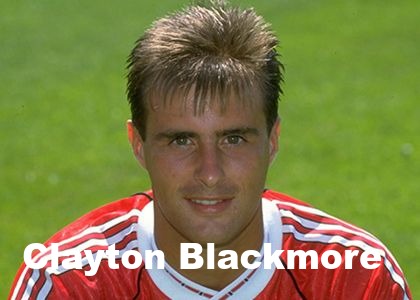
Clayton Blackmore When people talk about Manchester United legends, names like Ryan Giggs, Eric Cantona, and Paul Scholes dominate the conversation. Yet quietly woven into the fabric of United’s most successful era is a player who rarely gets the spotlight but was absolutely essential to the team’s dominance—Clayton Blackmore. Versatile, dependable, and endlessly committed, Blackmore embodied everything Sir Alex Ferguson valued in a squad player.
Clayton Blackmore was never the flashiest footballer on the pitch, but his intelligence, adaptability, and professionalism made him invaluable. He could play almost anywhere across the backline and midfield, stepping in without fuss whenever injuries or tactical changes demanded it. In an era where specialization was common, Blackmore’s flexibility made him stand out.
This article takes a deep dive into Clayton Blackmore career, his importance to Manchester United, his playing style, and why his legacy deserves more respect than it often receives.
Early Life and Football Beginnings
Clayton Blackmore was born on September 23, 1965, in Neath, Wales. Growing up in a football-loving environment, it didn’t take long for his talent to become evident. Like many Welsh youngsters, Blackmore developed his game on local pitches, learning the fundamentals through hard work rather than privilege or hype.
His early football education focused on discipline, awareness, and versatility. These traits would later define his professional career. Unlike prodigies who are groomed for a single role, Blackmore learned to adapt, playing wherever he was needed. This adaptability caught the attention of scouts early on.
Manchester United signed Clayton Blackmore as a youth player in the early 1980s. Joining a club of United’s stature at such a young age was no small achievement, especially during a period when competition for places was fierce. From the beginning, Blackmore showed the hunger and humility required to survive at the top level.
Breaking Through at Manchester United
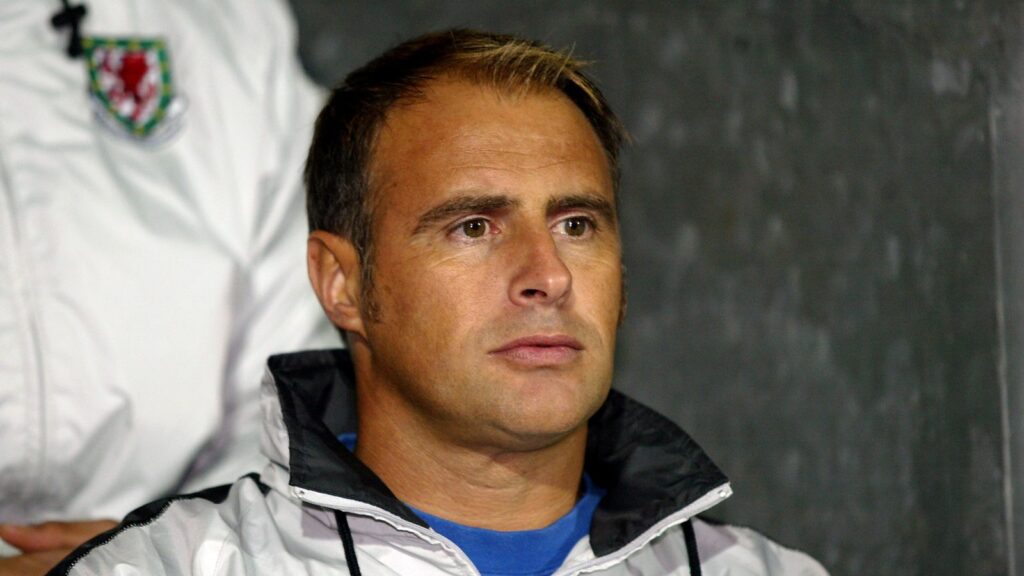
Clayton Blackmore made his senior debut for Manchester United in 1984, a time when the club was transitioning into what would become its most dominant era under Sir Alex Ferguson. Opportunities were not handed out lightly, and every appearance had to be earned.
What set Clayton Blackmore apart early in his career was his willingness to play any role asked of him. Full-back, wing-back, wide midfielder—Blackmore embraced them all. This versatility made him a trusted option for Ferguson, particularly during congested fixture periods or injury crises.
While he wasn’t always a guaranteed starter, Blackmore’s consistency meant he was rarely far from the team sheet. He understood his role within the squad and performed it with professionalism. In many ways, Clayton Blackmore represented the perfect squad player—reliable, selfless, and always prepared.
A Key Part of the Ferguson Revolution
The late 1980s and early 1990s marked the beginning of Manchester United’s dominance, and Clayton Blackmore was very much part of that journey. As Ferguson reshaped the club’s culture, players who embodied discipline and adaptability thrived—and Blackmore fit perfectly into that philosophy.
During United’s title-winning campaigns, Clayton Blackmore frequently stepped into the lineup during crucial moments. His ability to slot seamlessly into different positions ensured the team maintained balance even when first-choice players were unavailable. Managers value players like this far more than fans often realize.
One of Clayton Blackmore most notable contributions came during United’s 1992–93 Premier League title win. While stars grabbed the headlines, Blackmore quietly did the hard work, providing cover, width, and defensive stability whenever called upon. Championships are not won by star power alone, and Blackmore was proof of that.
Playing Style and Tactical Intelligence
Clayton Blackmore’s playing style was built on intelligence rather than flair. He wasn’t the fastest player on the pitch, nor did he rely on flashy dribbling. Instead, his game revolved around positioning, anticipation, and decision-making.
Defensively, Clayton Blackmore was disciplined and aware. He rarely overcommitted and understood when to hold his position. This made him particularly effective as a full-back in an era when defensive solidity was non-negotiable. He read the game well and often intercepted danger before it escalated.
Going forward, Clayton Blackmore was surprisingly effective. His crossing was accurate, and he supported attacks intelligently rather than recklessly. He knew when to overlap and when to stay back, a balance that made him a tactically reliable option in high-pressure matches.
Success, Silverware, and Big Moments
Clayton Blackmore time at Manchester United coincided with one of the most successful periods in the club’s history. During his tenure, he won multiple major honors, including Premier League titles, FA Cups, and League Cups.
While he wasn’t always on the pitch for finals, his contributions throughout long seasons were crucial. Football is a marathon, not a sprint, and Clayton Blackmore ability to maintain standards across competitions helped United sustain their dominance.
One of the most admirable aspects of Clayton Blackmore career was his professionalism during rotation. Even when starting on the bench, he remained focused and ready. That mindset earned him respect from teammates and coaching staff alike, reinforcing his importance behind the scenes.
International Career with Wales
Clayton Blackmore also represented Wales at the international level, earning multiple caps over his career. Playing for the national team brought different challenges, often with fewer resources and less tactical cohesion than club football.
Despite this, Clayton Blackmore remained a dependable figure for Wales. His versatility again proved valuable, allowing managers to use him in various roles depending on squad needs. He approached international duty with the same professionalism he showed at club level.
Although Wales did not enjoy major tournament success during his international career, Clayton Blackmore commitment never wavered. He represented his country with pride, consistency, and integrity—qualities that resonate deeply with football purists.
Later Career and Life After United
After leaving Manchester United in the mid-1990s, Clayton Blackmore continued his career with clubs such as Middlesbrough and Barnsley. These years allowed him to take on more regular playing time and leadership responsibilities.
Even outside Old Trafford, Clayton Blackmore professionalism remained evident. Younger players often looked to him for guidance, and his experience at the highest level proved invaluable in dressing rooms across the Football League.
Following retirement, Clayton Blackmore remained connected to football through coaching and ambassadorial roles. His post-playing career reflected the same quiet dedication that defined his time on the pitch—never chasing attention, always contributing where possible.
Legacy and Why Clayton Blackmore Matters
Clayton Blackmore may never dominate highlight reels or viral football debates, but his legacy is undeniable. He represents a type of player that modern football sometimes overlooks—the intelligent, adaptable professional who puts the team first.
In today’s game, where squad depth and tactical flexibility are more important than ever, Clayton Blackmore skill set would be highly valued. His career serves as a reminder that success is built not just on stars, but on players willing to do the unglamorous work.
Ultimately, Clayton Blackmore deserves recognition as one of Manchester United’s most reliable servants. He was never loud, never flashy—but always ready. And in football, players like that are priceless.